Wednesday, June 10, 2015

This is how Apple Music could change the way you listen to music

Among the announcements at Apple’s annual developer’s conference was a potential game changer that could make the Cupertino-based company the world leader in streaming music, the latest way to get your daily dose of rock, pop, hip-hop or any genre of your choice. It's called Apple Music, a brand new streaming service from Apple.

So just how significant is it? Well, think of a BBC world service for the current generation, albeit a paid one.

Apple describes the new service as a combination of the “best ways to enjoy music” – a streaming music service, a worldwide live radio station broadcasting round-the-clock and a new way for music fans to connect with their favorite artists.

And if the company plays its cards right, Apple Music could well go on to become the dominant player in streaming music, which is growing by leaps and bounds around the world, while digital downloads are starting to decline.

Apple Music will build on the company’s acquisition of Beats Entertainment, a world leader in headphones, and offer users access to a large and diverse catalog of music that can be played on phones, tablets, desktop computers and other devices.

The company plans to roll out Apple Music in more than 100 countries on June 30 and the service will be free for the first three months. After that, there will be a monthly fee in the US of $9.99 or $14.99 for a family pack with up to six accounts.

There is no word from Apple on pricing round the world but the company has often adopted a differential pricing policy – tracks that go for a dollar or more in the US are often sold on iTunes in India for as little as 25 cents.

Streaming music isn’t entirely a new concept – it has been tried by both legal and illegal players. Pandora, available in the US, Australia and New Zealand, has 250 million registered users.

Spotify, a commercial music streaming, podcast and video service that provides content from labels and companies such as Sony, Warner Music Group and Universal, has more than 60 million active users in Europe, the US, South America and parts of Asia. Tidal, the first high fidelity streaming service, has 540,000 subscribers in Britain, the US, Europe, Malaysia, Hong Kong and Singapore.

Grooveshark, one of the most popular streaming services, was shut down recently because it wasn’t paying artists or record companies for the copyrighted music it provided for free to users.

On the other hand, Apple has 800 million iTunes accounts. Though not all these account holders may be interested in music, they can be used to sign up more people for the Apple Music service. And the potential of huge sums from a new subscription streaming model, whereby musicians are paid for every play of a song, will certainly keep the music labels happy.

Apple has also gone the extra mile to connect with music fans. While Pandora has an automated music recommendation service powered by the Music Genome Project, Apple Music has hired music experts from around the world to create playlists based on a user’s preferences, and it says they will “become better curators the more you listen”.

The “For You” section of Apple Music will provide a mix of albums, new releases and playlists personalised for users.

Beats 1, a live radio station dedicated to music, will be part of Apple Music Radio. It will broadcast to more than 100 countries round-the-clock and feature influential DJs such as Zane Lowe in Los Angeles, Ebro Darden in New York and Julie Adenuga in London. Human curation will take the lead in Apple Music Radio, which will have other stations featuring many genres of music. Members will have the option to skip as many songs as they like or “change the tune without changing the dial”, as Apple puts it.
Another aspect of Apple Music will be Connect, which will allow musicians to connect with fans and share lyrics or even release their latest songs directly. Connect was introduced at Monday’s Worldwide Developers Conference by Nine Inch Nails frontman Trent Reznor, a sign of the heavy hitters that Apple has lined up behind its new service.

We won’t have to wait very long to find out if Apple Music lives up to its potential – June 30 is just weeks away

How to opt your website out of Apple's News app

the microsoft lumia 640 review

The group that was once Nokia's mobile division has gone through a great number of changes in the past few years. After declining sales of Symbian devices, the company decided to go all in with Microsoft's Windows Phone platform. In a very short time, Nokia became the number one vendor of Windows Phone smartphones in the world. Despite this, the move to Windows Phone failed to revitalize the company. In August of last year, Microsoft purchased Nokia's mobile devices business in a 7.2 billion dollar acquisition. Less than a month later, Microsoft launched the Nokia Lumia 830, and the Nokia Lumia 735. These were the last two Lumia smartphones that would be branded as Nokia devices. With Nokia's phone division absorbed into Microsoft, future Lumia devices would fall under the Microsoft brand.
Today's review focuses on the Microsoft Lumia 640. This phone was announced alongside the Lumia 640 XL at MWC in February, and it's one of the first new Lumia devices released under the Microsoft brand. At $129, the Lumia 640 occupies a fairly low price point as far as smartphones are concerned, and it serves as an entry model to the Lumia smartphone line. To give a quick idea of what that $129 gets you in terms of hardware, I've organized the Lumia 640's specifications in the chart below.
Microsoft Lumia 640
SoCQualcomm Snapdragon 400
(MSM8926)
4x ARM Cortex A7 at 1.2 GHz
Adreno 305 at 450 MHz
Memory and Storage1GB LPDDR3 RAM, 8GB NAND + MicroSDXC
Display5.0" 1280x720 IPS LCD
Cellular Connectivity2G / 3G / 4G LTE (Qualcomm MDM9x25 UE Category 4 LTE)
Dimensions141.3 x 72.2 x 8.8 mm, 145g
Cameras8MP Rear Facing w/ 1.12 µm pixels, 1/4" CMOS size, F/2.2, 28mm (35mm effective)

0.9MP Front Facing, F/2.4, 30mm (35mm effective)
Battery2500 mAh (9.5Wh)
Other Connectivity802.11b/g/n + BT 4.0, GNSS, DLNA
Operating SystemWindows Phone 8.1 + Lumia Denim
SIMMicroSIM
Price$129 on Cricket Wireless
The Lumia 640's hardware is certainly above average in some areas. The first thing I noticed is that it ships with a 5" 1280x720 IPS display. This puts it significantly ahead of devices at the same price point which typically ship with qHD panels. 1280x720 devices show up closer to the $200 price bracket, and so the Lumia 640 is definitely ahead in this regard. The 1/4" 8MP camera is another spec that you wouldn't expect to see on a smartphone priced at around $100. While the camera sensor is hardly the only factor when it comes to final image quality, Lumia devices have traditionally had very good image processing, and so the Lumia 640's camera capabilities may end up far beyond those of the competition.
All the other specifications are fairly typical for a phone of this price. 8GB of NAND, 1GB of RAM, and 2.4GHz 802.11n WiFi are all you get at this price. There is one thing that disappoints me, and that's the SoC. Snapdragon 400 is fairly old by this point, and has been replaced by Snapdragon 410 for some time now. While the Moto E review showed that Snapdragon 410 isn't an enormous leap over Snapdragon 400, it certainly helps, and I wish Microsoft had used the Lumia 640 as an opportunity to start shipping ARMv8 devices.

Design

When the Lumia brand was originally introduced there were only two devices available. The first was the Lumia 710, and the second was the Lumia 800. I had always felt that the Lumia 710 was a fairly standard looking smartphone, but Lumia 800 had a unique type of industrial design. That design has since expanded with the introduction of models at different price points, and some of the physical characteristics that can be seen in the Lumia 640 are not the same as those in other Lumia devices like the Lumia 735.
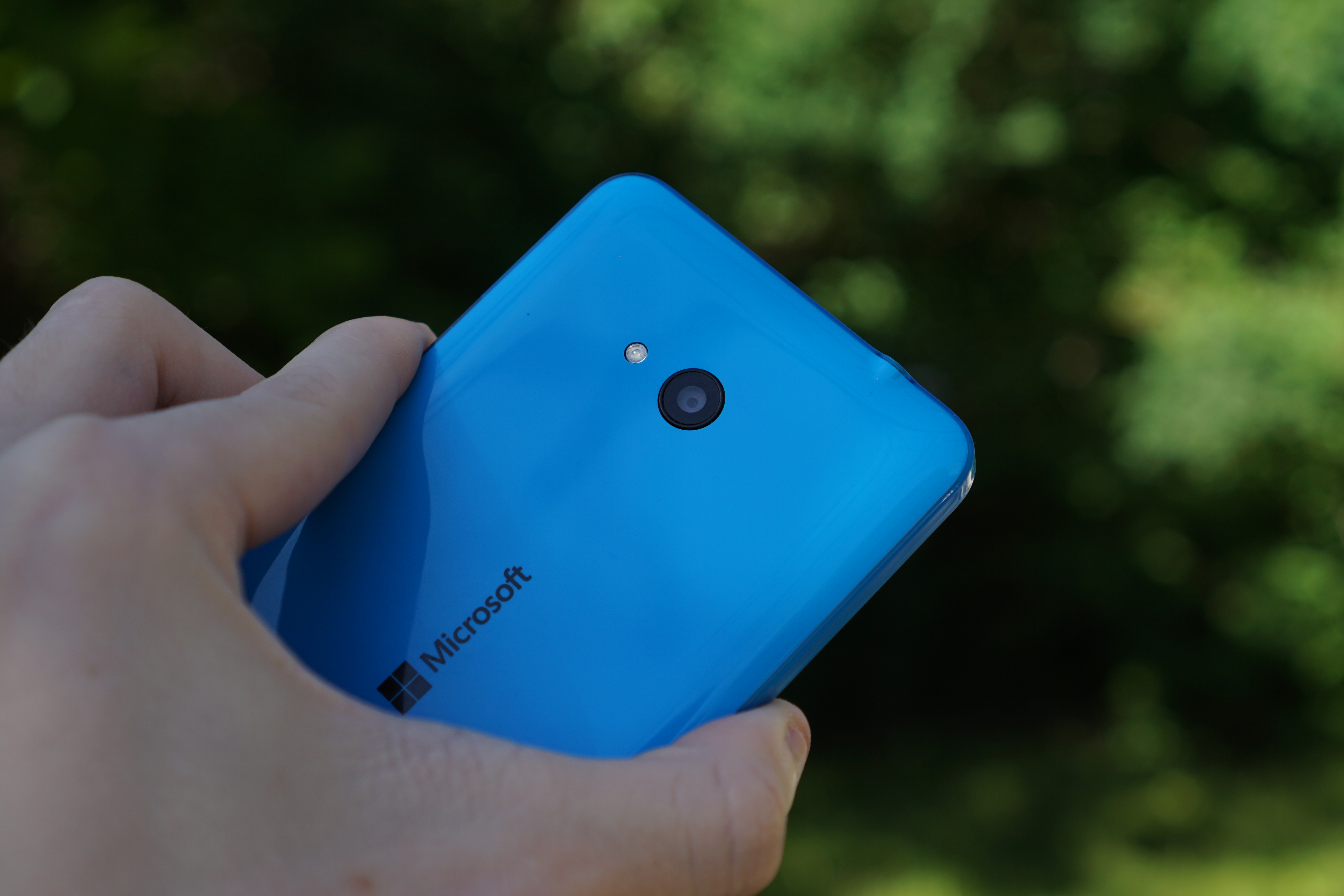
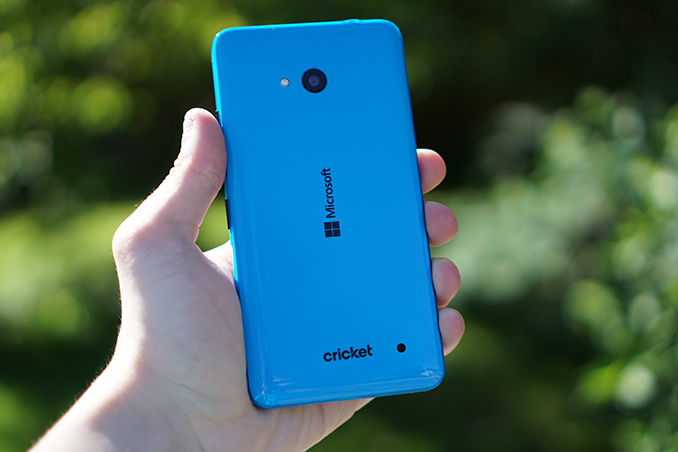
In a change from the order I typically follow when discussing the design of phones, the first part of the Lumia 640 I want to examine is actually the back cover. It’s a very solid feeling blue glossy plastic shell, although I would much prefer a matte finish, as the glossy plastic on this cover is already covered in scratches and smudges. The back cover has the Microsoft logo in the middle and in the case of this review unit a Cricket Wireless logo on the bottom. Next to the Cricket logo is a small hole to allow sound to pass through from the speaker underneath. Above the Microsoft logo is the 8MP rear-facing camera, and to the left of that is the LED flash.
What I find notable about this back cover is that although it’s removable, it feels incredibly solid and holds onto the phone very tightly. To put things in perspective, I actually questioned whether or not the back cover was removable when I first received the phone. Because there was no visible SIM slot I had to go online and confirm to myself that Cricket Wireless is not a Verizon or Sprint sub-brand running on EvDO and that there had to be a SIM slot somewhere. Only after I did this was I confident enough to pry off the back cover from the top of the phone.
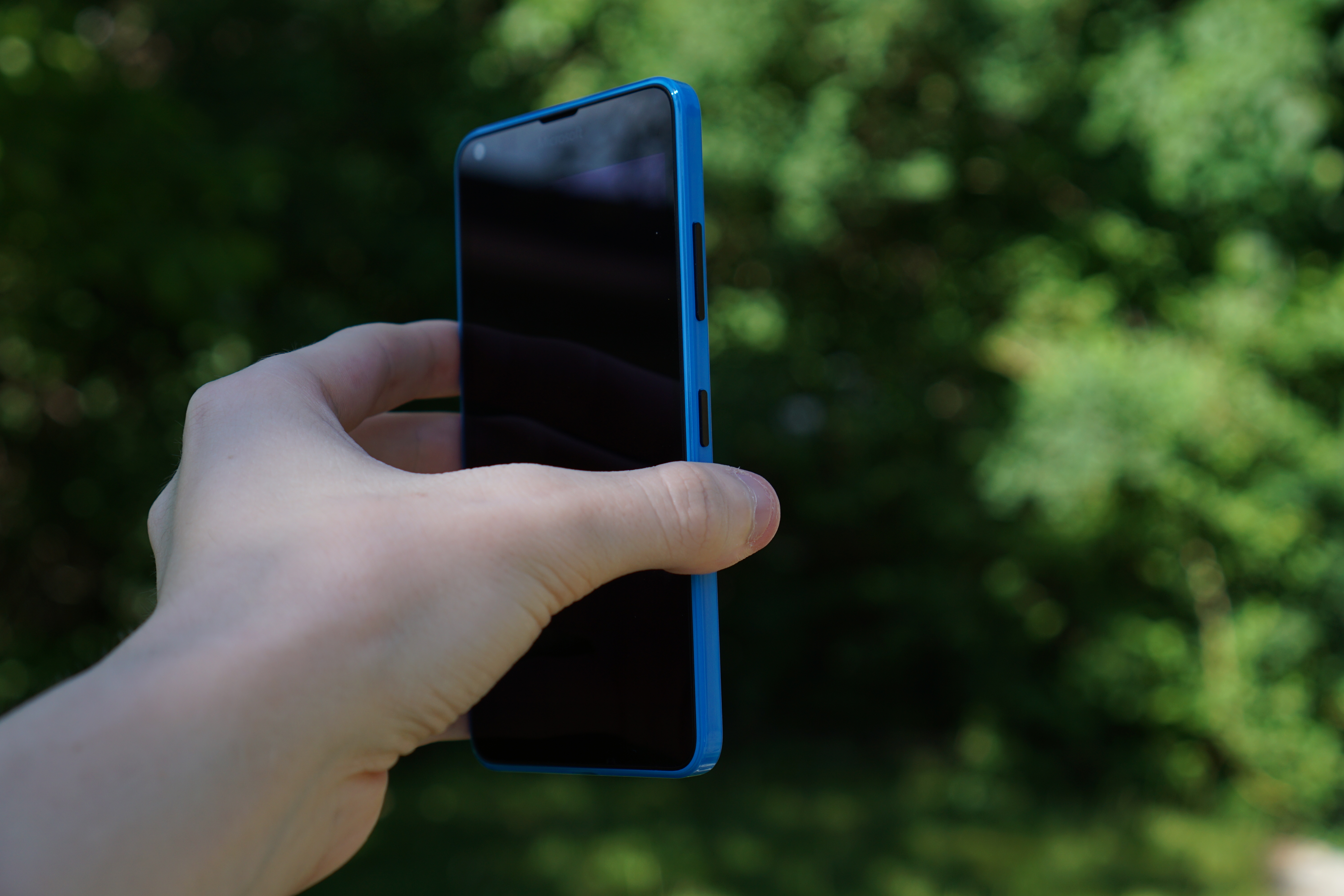
The left side of the Lumia 640 is completely bare, while the right side has both the power button and the volume rocker. I was actually surprised at how good the buttons felt. The last two phones I reviewed were the Moto E and the ZenFone 2, and they also had removable frames or shells with some of their buttons attached to them. Compared to them, the buttons on the Lumia 640 have a much nicer tactile response, and a longer travel distance.
One key difference between the Lumia 640 and some of Microsoft’s other Lumia devices is that it has flat sides and rounded corners. This contrasts with the traditional appearance of Lumia devices, which are flat on the top and bottom, but rounded on the left and right sides. The shape of those edges also meant that there was no way to have rounded corners even though the corners of the black face plate were rounded, which I felt created a unique appearance that made Lumia devices more distinct. The more standard flat edges and rounded corners of the Lumia 640 just aren’t as unique, and I wish it was more like a traditional Lumia phone.
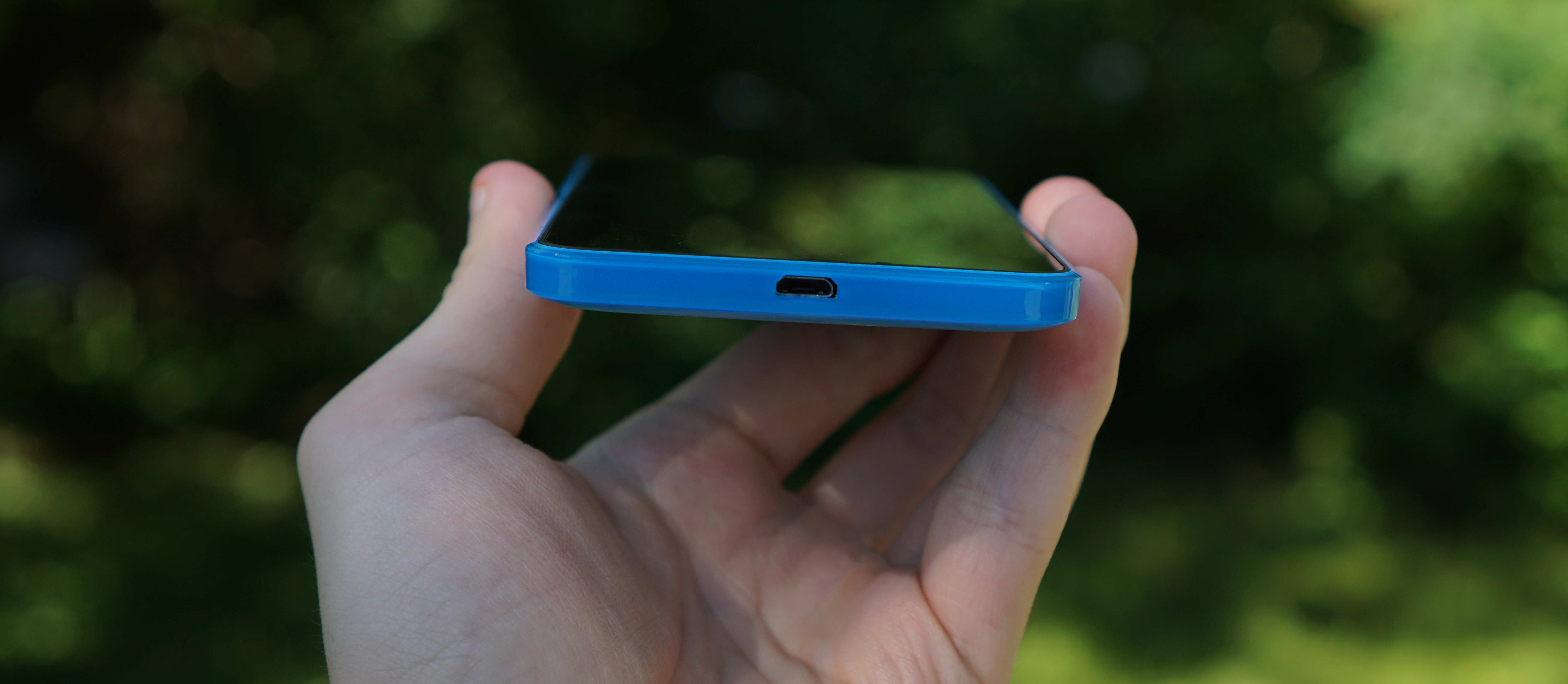
The top of the Lumia 640 has the 3.5mm audio jack, and the microUSB port is on the bottom. Something I noticed about my unit is that the actual port didn't line up perfectly with the hole that was cut in the plastic back shell of the phone. The hole was shifted slightly to the right, and the offset was just far enough to ensure that I could never get my charging cable to go in without jiggling the connector around until it found its way into the port. I assume that this is just a production mishap that is specific to my unit, but it's enough to cause a moment of frustration when trying to charge the phone or transfer files to it from a computer.
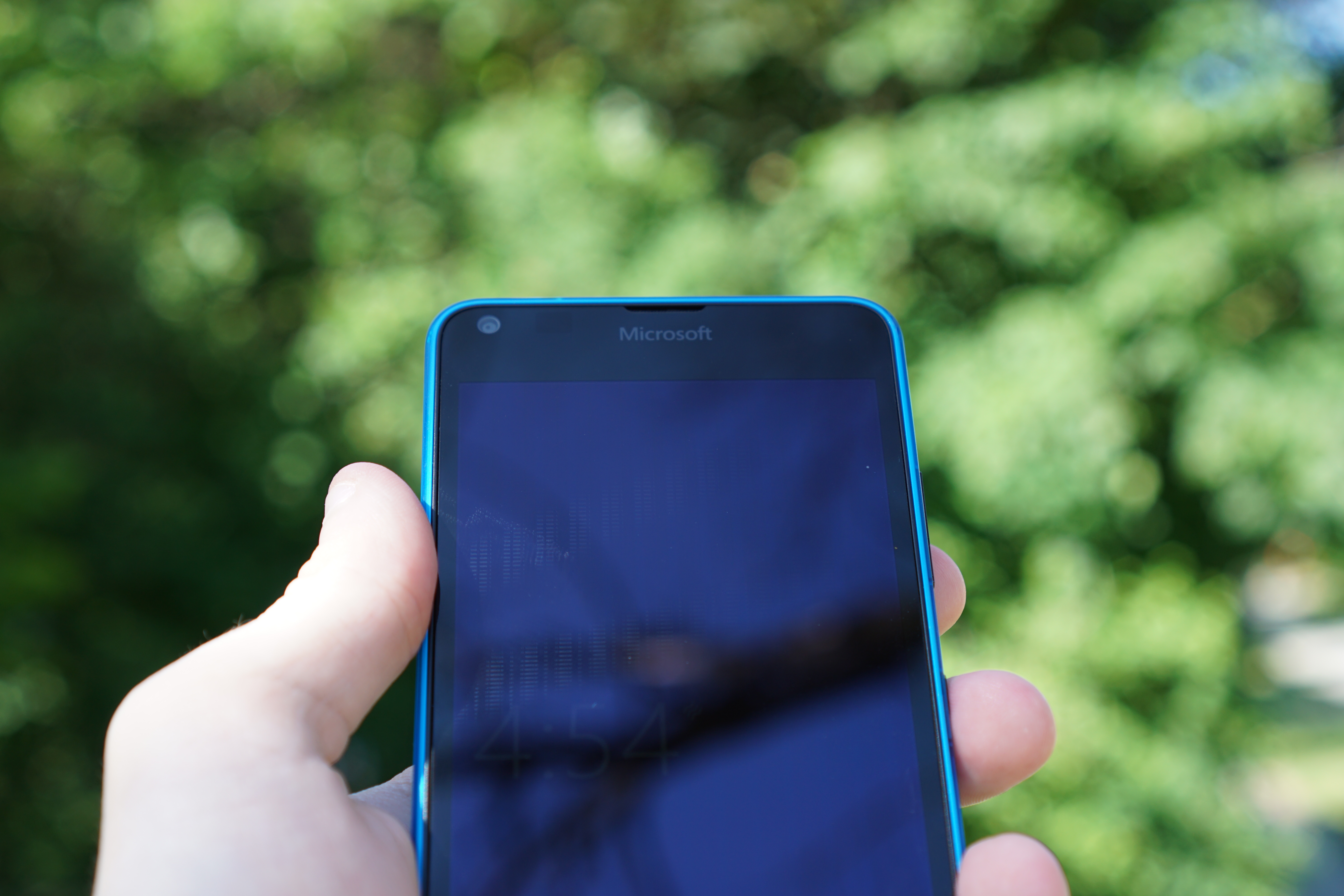
There’s not a whole lot to see on the front of the Lumia 640. It’s dominated by the 5” display, with only a handful of things positioned on the bezels around it. You may notice that you can see the touch array when light shines on the phone in a certain way. This is common on many phones, but it's a bit more noticable on the Lumia 640 than other devices. The bezel at the bottom of the display has a microphone to be used during calls, while the top has the front-facing camera and the earpiece speaker. Microsoft has seen fit to also put their logo on the top bezel, just in case you missed the logo right in the middle of the back cover.
My overall impression of the Lumia 640’s build quality and design is positive. While I’m not a fan of the glossy finish, the overall construction feels much more solid than any other phone at this price point that I’ve used.

Microsoft Says Forced to Remove Facebook Integration in Windows, Windows Phone

microsoft_lumia_640xl_generic_official.jpg
Facebook deep integration was one of the most notable features of Windows Phone ever since the first device arrived in the market. This however is going to change as Microsoft has been forced to kill Facebook integration in several services and platforms, including Windows Phone, Windows 8, and Outlook.com
Microsoft blames the updated Graph API of Facebook as the reason for shutting down Facebook Connect - its name for the integration across its services.
"Facebook's Graph API is the tool that we use to connect your Microsoft account to Facebook. It brings contact information from your Facebook friends into Outlook.comand the Windows People app, keeps those contacts up-to-date, and provides options in apps and services like Photo Gallery, Movie Maker, and OneDrive.com to share to Facebook. We collectively refer to these features as Facebook Connect," noted Microsoft in a post.
In a detailed post, the company has listed some of the services that will be hit by the unavailability of the Facebook integration which include Outlook.com, Windows Phone, and Windows (8 and 8.1).
If users have already connected their Facebook account to Outlook.com, the Facebook contacts will no longer be updated with information from the social network. A new user, on the other hand, will not be able to connect Facebook contacts to the Outlook.com account. Facebook events will be also no longer automatically synced to the Calendar on Outlook.com, Windows, Windows Phone and Office 365. The Windows 8 Photo Gallery and Movie Maker app users will be no longer able to publish images and videos directly to Facebook.
The Outlook Social Connector (OSC) in Outlook 2013 will no longer connect to Facebook. Microsoft notes that users will no notice an "Invalid user name or password" error in the OSC connection dialog.
For Office 365 Outlook Web app users, Facebook contacts will no longer be synchronized to the Office 365 account, if a Facebook account was previously connected.

Apple is launching search engine to destroy Google — and you’re already using it


Apple is launching a search engine called “Spotlight,” at a pace of 3% a quarter — if you have an iPhone or Mac you’ve been using it for a while!

Google has gone from unstoppable to “about to be stopped,” in the minds of the smartest folks in the industry. Search ads are Google’s cash cow; unfortunately, for them, it seems that Google is not advancing the platform (outside of slamming massive amounts of “paid inclusion”).

“Paid Inclusion” is basically the ads that consumers think are content, but are really ads.

[ Click to Tweet (can edit before sending): http://ctt.ec/90f3g ]

You can see this on your desktop by doing a search for “used iPhone.” The majority of the screen real estate is now ads! In the example above 11 of the 12 links are advertisements!

Wow.

On top of that, < 1% of the screen real estate is dedicated to telling this insane fact to consumers! See the tiny ‘AD’ and ‘SPONSORED’ logos? Yeah, barely noticeable … by design.

In the old days Google used to highlight the ads with a background color … over time they have included smaller and smaller notes; this is, of course, a huge debate in the industry. In fact, people have done studies to prove that a large percentage of users don’t know they are clicking on ads.


GOOGLE GRINDS, APPLE SHINES

While Google is grinding users down with 90% of search results generating ad links (10 of 11), Apple is building a search engine in plain sight called “Spotlight.”

Spotlight is what happens on your desktop when you hit COMMAND-SPACE or on your phone when you hit “slide down” when on your home screen.


You can see here, when you search for “Weather Cupertino” it gives you the result with no advertisements, no Google logo — nothing but content.

On your mobile phone they will show you Wikipedia pages, App Store links and more — without any ads.

Every time Apple hosts their World Wide Developer Conference (WWDC) they add a couple of features to Spotlight. The big update came yesterday, with “deep link searching in apps.” Here they show folks searching for “how to make chocolate cake” and subsequently dumping users into the Yummy App.

No. Google. Necessary.

In fact, Apple added the ability to do basic math in the search bar — something Google added back in 2008.


Tim Cook is slowly getting revenge on Google on behalf of Steve Jobs — without doing it directly. When Jobs found out that Google was secretly going to compete with the iPhone he reportedly said:

“We did not enter the search business, Jobs said. They entered the phone business. Make no mistake they want to kill the iPhone. We won’t let them, he says. Someone else asks something on a different topic, but there’s no getting Jobs off this rant. I want to go back to that other question first and say one more thing, he says. This don’t be evilmantra: “It’s bullshit.

So, Tim Cook is playing the slow revenge game, by going into the search business. At this pace, I could see Apple knocking 10 points off Google’s search business here in the USA in the next couple of years by simply making search an advertising-free piece of Apple’s OPERATING SYSTEM!

At the WWDC, Apple made a point of saying that they don’t store or use your personal information. This slide is the “famp;k Google” slide, a straight kick in the nuts of Google’s absurd privacy practices, which include searching through our emails and tracking every behavior we make online.


Tim Cook is suggesting a better path for users: Apple will give you the ability to search for “free,” as in ad-free and data-collection-free.

Apple is leapfrogging Google by making search something that is built into the core of your mobile phone and desktop. The reason to do this is that you can compress time by removing the need to visit a website like Google.com.

However, don’t be surprised if Apple gives spotlight.com $10m for their domain name and makes a web-based search engine as a final F-U to Google.

In fact, the power move for Apple would be to buy DuckDuckGo and use their excellent web search as backfill to the powerful “One Box” search innovations they keep launching every couple of months.

[ One Box are the “answers” you see at the top of search. The answers that Google frequently scrapes from content sites, keeping you from having to visit the partners who paid to create that content! ]
EVERYONE HATES GOOGLE

Google has encouraged the competition they are getting by grinding consumers with a never-ending advertising assault, not to mention how they have screwed over their partners from Yelp to eHow to YouTubers (and my last company Mahalo — not that I’m bitter! OK, I’m really bitter about it … that happens when you have to lay off 75 people because Google changed their algorithm specifically to screw you and other competitors).

Management at Google stopped listening to, and started grinding, consumers and partners shortly after they went public. Executives at Google were always a little odd, but they didn’t used to be marauders. They were nerds who wanted to spread the wealth and build up huge partnerships.

However, inside sources tell me the pro-partnership, extroverted executives were driven out and the more introverted, intelligentsia took over. Those introverted innovators used their massive success — built off of founders and users who loved them — and went on a “win it all” campaign.

That “win it all” effort is going to wind up delivering a comeuppance for Google’s insular executive team. Right now the government, all their former partners and, recently, a growing consumer contingent, are all rooting for Google to fail.

Message to Larry: when you go from loved for giving users unlimited storage with GMAIL and saving YouTube from legal destruction, to being hated by everyone, you’re doing it wrong!

Google needs to 10x how they treat their constituents — which is EXACTLY what Tim Cook is doing. Tim Cook is painting Google, accurately, as the evil successor to Microsoft, and Google’s management team is reinforcing this by closing ranks and destroying their partners.

Google has a tin ear when it comes to how they are perceived, and if anything will be their downfall, this will be.

best @jason

PS – I’m hosting a Bastille Day/Demo Day Party, complete with a Petanque tournament on July 14th. We’re going to take the afternoon off and play, celebrate and congratulate all these great entrepreneurs who are fighting it out in the arena every day! If you’re an active angel investor or a member of the press, emailbastilleday@launch.co.

PPS – If you’re an accredited investor and you want to invest in the same startups I’m investing in, you can sign up for my AngelList Syndicate atangel.co/jason/syndicate.

PPPS – We are hiring two audio/video/directors here in San Francisco to work on my podcast This Week in Startups. It’s literally the greatest job in the Bay area if your passion is video, podcasting and/or startups.

Google gives up “Street View” in Tamil Nadu after finding only Amma, Kalaignar posters everywhere


Search engine giant Google Inc has given up capturing street images in Tamil Nadu for its street view feature on Google Maps, after finding only posters of Tamil Nadu Chief Minister J Jayalalithaa and former CM M Karunanidhi all over the state. The decision was taken at a high level meeting chaired by Google India CEO Rajan Anandan. Google founders Larry Page, Sergey Brin and Senior Vice-president Sundar Pichai too, dialed into the meeting, sources said.

“After surveying the state of Tamil Nadu for months together and doing every bit to capture diverse views of each street from various angles and still ending up with only shots of Jayalalithaa and Karunanidhi posters everywhere, with a heavy heart, we decided to give up Street View in Tamil Nadu,” Anandan told The UnReal Times. “It makes no sense arranging for a new street view vehicle and high definition panoramic cameras to run all over the state to find only 2 faces. Larry suggested that we might as well hyperlink Tamil Nadu to street view to a google image search for posters of Amma and Kalaignar. So that’s exactly what we’re going to do,” Anandan added.

The AIADMK, however, in a move that has positioned the party into taking the upper hand, has offered to help Google in what could be a first-of-its-kind deal. “It’s simple. They have to supply us with images of random streets. Within minutes, we will photoshop our Amma’s posters on them and send the images back to Google. And there you go! Your street view is ready. And we won’t restrict ourselves into just photoshopping posters. We will let our creative juices flow uninhibited and will morph people prostrating before them, bowing down to them, doing paal-abhishekam, aarathi and what not! In short, we have made Google an offer that they just can’t refuse,” an AIADMK leader toldThe UnReal Times.

Meanwhile, the DMK has conceded that they have been left behind in the race. “We are obviously better than the AIADMK on many levels, but when it comes to photoshopping, we do admit that we’re lagging behind. Without being proactive, we have unfortunately allowed them to evolve into one of Asia’s biggest photoshop factories. So naturally, people find Amma’s vivid, imaginative posters more fascinating than the same old smiling face of Kalaignar. We have a lot to catch up on, on that front,” a DMK leader admitted.

My Account: A new Google hub for privacy settings

Google has launched 'My Account', a new hub for privacy and security settings from which users can manage their information shared with different Google products, such as Maps and Search, as well as adjust the security settings for these services. 
My Account is divided into three sections:
  • Sign-in and security settings
  • Personal information and privacy settings
  • Account preferences
A link to the new privacy site is also included.  This link has a list of answers to FAQs such as, “What data does Google collect?” and “Does Google sell my personal information?”
With the new hub, Google account holders are able to do things such as change passwords, view devices accessed via their accounts, see what apps are connected to their Google profiles, update their personal info, browsing, and other activity history.